Chris Lakin
Chris had his AI agent look through his old drafts, chats and notes to piece together how he wrote the essay. We organized the write-up around our usual questions. Chris’s own words are in blue.
Why did you decide to write this essay? What was your intention for the essay when you started, and how did that evolve over time (if it did)?
I wanted to correct a common misconception, and write an example of the locally-optimal idea. The first title was ‘Suffering is a strategy’.
The locally-optimal idea is his own, from an earlier post: suffering is a strategy, the best strategy available at the time
— not a fixed consequence of the past. Asked the same question by one of his editors eight days before it shipped, he gave 2 reasons. The first was a tweet he disagreed with.
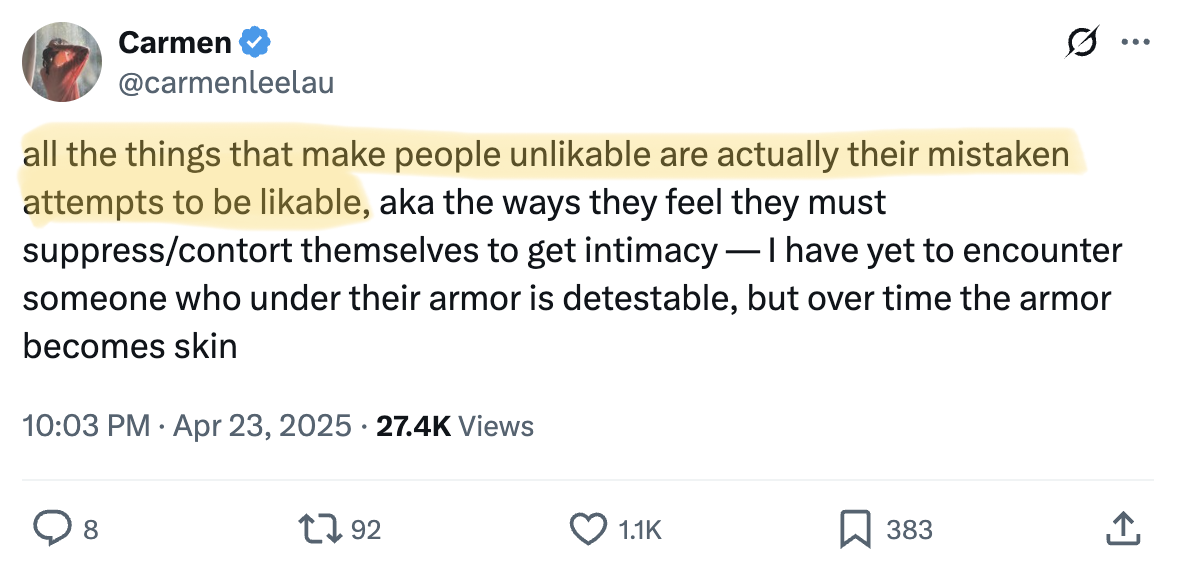
In the draft document, 2025 May 6. He pasted the tweet in as a screenshot; the yellow is his editor’s — they took the highlighting over after watching him try to draw it himself.
The second, from the same chat: partly it's that my clients find it to be a useful pattenr
— like all insecure behavior tends to be risk-aversion
— and so insecurity then is very ~rational
.
How hard was it to write this essay, relative to how hard it usually is for you to write? Was there any part that was hardest?
My writing process is sort of insane where it's not uncommon for me to draft something in the background for months/years before posting. In this case I got a lot of help.
A paid editing agency worked in their own copy from May 7 to 16. His agent traced every sentence of the published essay back to the earliest revision of either document in which it appears: 32 of the 35 sentences first appear in the editors’ document — though the trace measures documents, not authorship; he was editing inside their copy the whole time.
Chris wrote the argument, the title, the charts and the decision to publish. By his own account, his editors wrote most of the published prose. He later paid them a five-figure bounty, covering this post’s performance among other things.
His memory of the final stretch is that what the editors delivered felt off to him — he’s no longer sure exactly why — and that Ha, his girlfriend, helped him pull it back into his style so he could post it — she kinda saved it last minute like that.
How long did it take you to write this? Both over what time period you were ‘working’ on the essay — from idea to final draft — and how long it literally took you to write (the time spent typing/revising/editing).
Idea to published: about 20 months. The document the argument was first written for was opened on 2023 Sep 30. 13 days from the document that became the post — opened Saturday 2025 May 3, published Friday May 16 at 3:22pm.
Literal time at the keyboard: not exactly recoverable, because every system involved saves snapshots rather than keystrokes. 4 documents kept independent histories of this essay, and together they hold 292 saved versions, made in 80 separate sittings across 43 separate days. Twelve of those 43 days are the original drafting run, 2025 May 3–16; the other 31 are after publication.
The first sitting can be timed exactly, because saves survive from every point in it: the document was created Saturday at 9:04pm, hit 268 words by 9:30pm, and 587 by 10:15pm — 71 minutes, zero to 587 words.
What was the process you used to write? How many steps and iterations were there? How similar or different is this to the process you use for other essays?
A sentence in the group chat where he first said it plainly, then a document retitled 4 times, then his editors’ separate document, then 11 months of edits to the live post.
The one document was retitled 4 times as the argument kept getting narrower: “Suffering is a strategy” → “Suffering is (often) on purpose” → “Is suffering often just risk-aversion?” → “Is self-loathing just risk-aversion?” → “Social Anxiety Isn't About Being Liked—It's About Not Being Disliked” — then shortened at publication. That walk of titles is his stated method: the title always comes afterwards, it's just like YouTubers and their YouTube videos. They change the thumbnail and the title after they post it.
And: Just treat me like a mad scientist who has no idea of how to make products mass market.
Of the 212 saves after the first, 151 changed visible text, 42 changed only formatting, and 19 changed only the size of an image — him dragging one wider and narrower.
The charts came on Sunday 2025 May 4 — the morning after that first Saturday sitting. Chris built them by prompting o4-mini and pasting the code into Colab — at least 3 ChatGPT threads that Sunday, all about the chart rather than the prose. The first instruction in the first thread: recreate this graphic,
with a chart he’d drawn 5 weeks earlier attached. Chris recalls the graphics taking about 3 full days to get right.
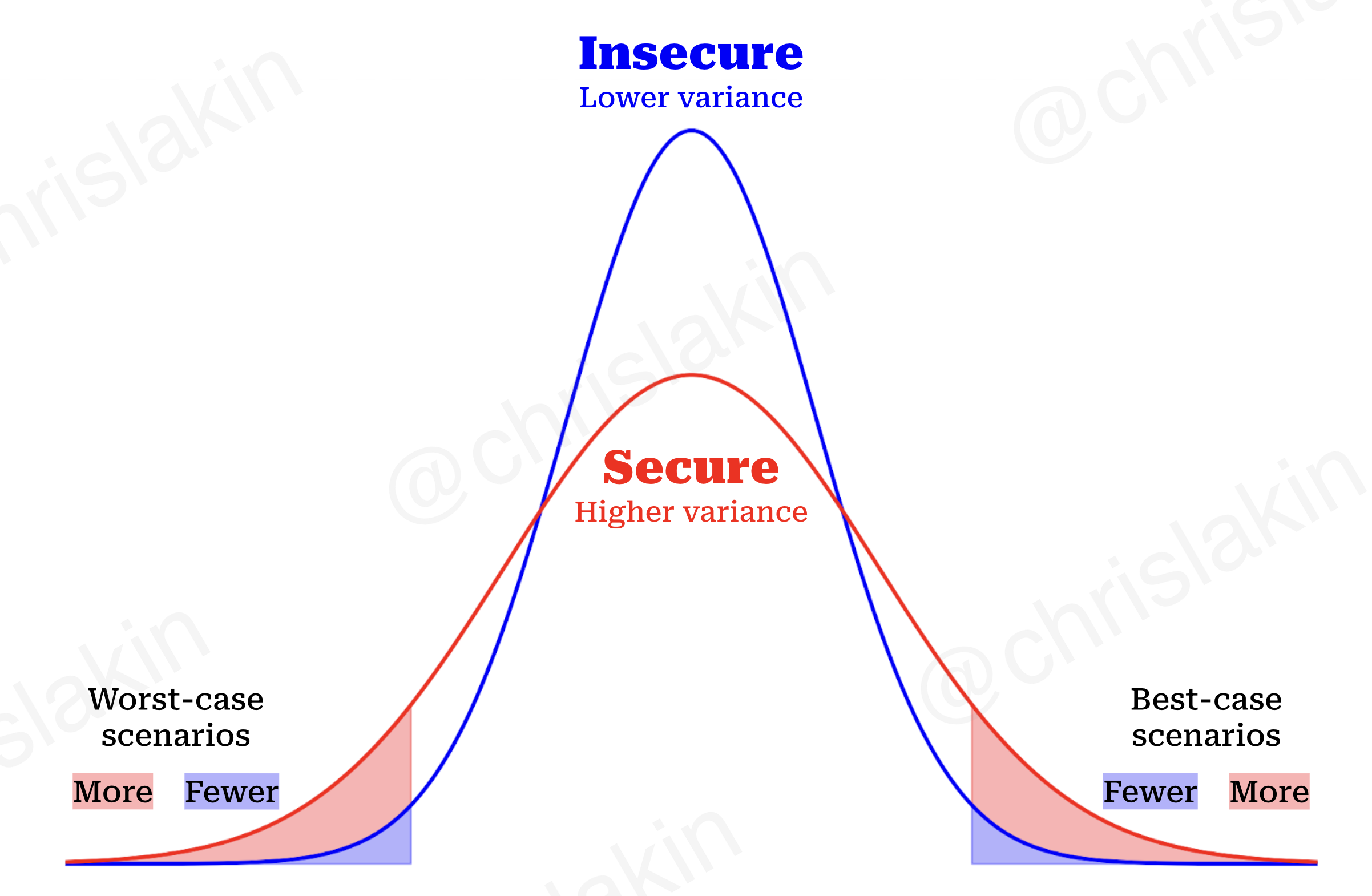
Thursday 2025 Mar 27, 7:35pm — 7 weeks before the essay. A near-identical re-render was still sitting in the draft on the night of May 3.
The second graphic — the “Being liked is not the goal / Being not disliked is the goal” spectrum — was made on May 15, the day before publication, from a sketch on his iPad that he asked ChatGPT to redraw. That one took 3 messages start to finish.
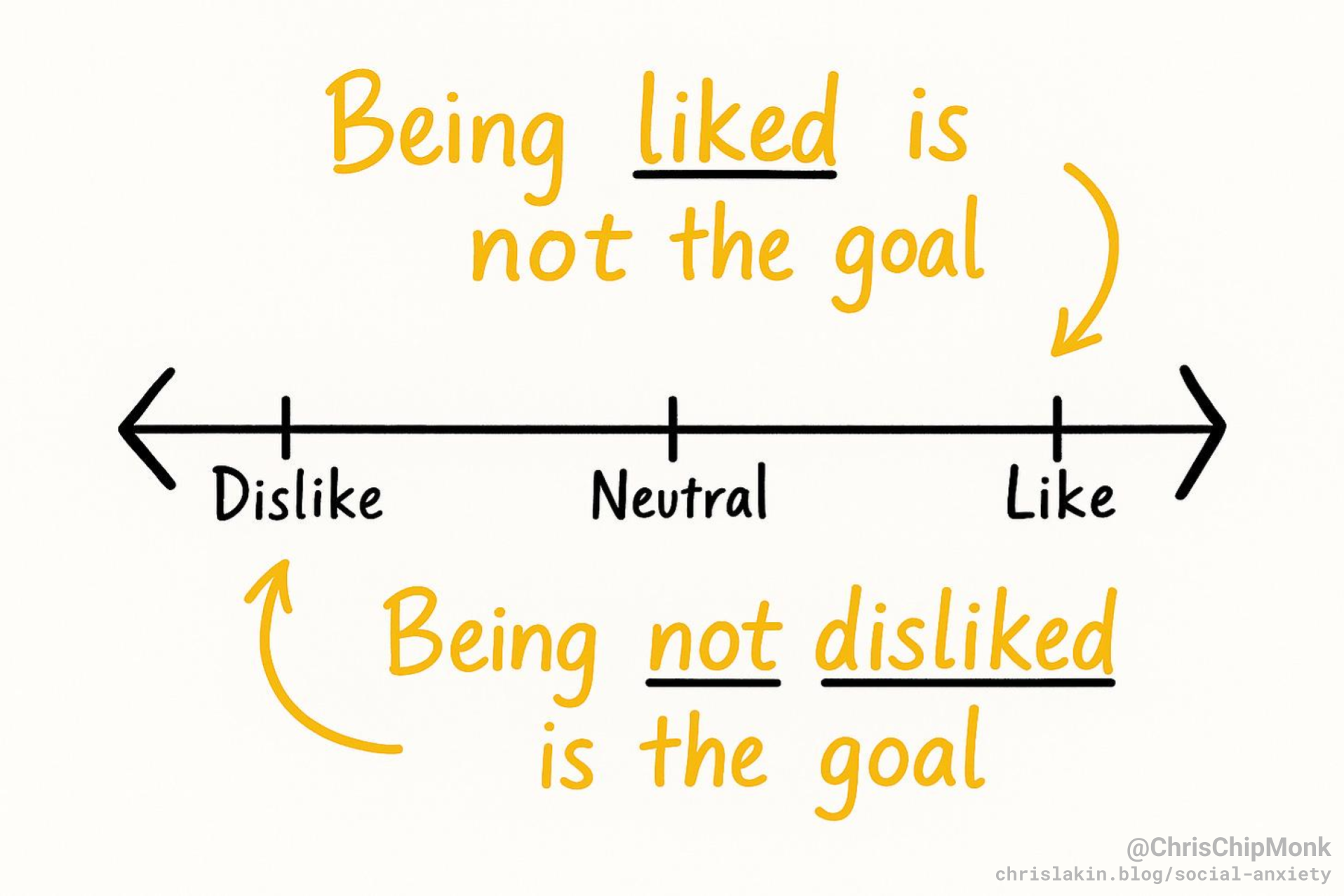
The second graphic, in the live post today.
Do you have any screenshots or early snippets of the essay you could share? Stuff that is either not in the final essay or not in there verbatim?
An entire scene, cut before publication — it lived in the draft’s scratch tab: One day I was having some allergies and was uncomfortable enough to be squirming around. Then, for whatever reason, I asked my discomfort, ‘Why so strong?’ It responded: ‘Because mom will come and help.’ Which was funny because she was thousands of miles away. In the moment I realized this, the suffering completely evaporated.
A framing that was replaced by the published version’s open questions: There are two ways to evaluate this. Either the socially anxious are desperate to be liked and are utterly failing… Or…
The essay is also the salvage of a post that died — “How can I like you if YOU don't like you?”, opened 7 months earlier as a completely different essay about self-fulfilling prophecies. He had a paid illustration in progress for it: $120 for an image better than the one he had, plus $400 if it drew a tweet over 3,000 likes or people started quote-tweeting it as a meme. 5 days after this essay published, he wrote to the illustrator that the post was postponed — and sent the $120 anyway, the next day.
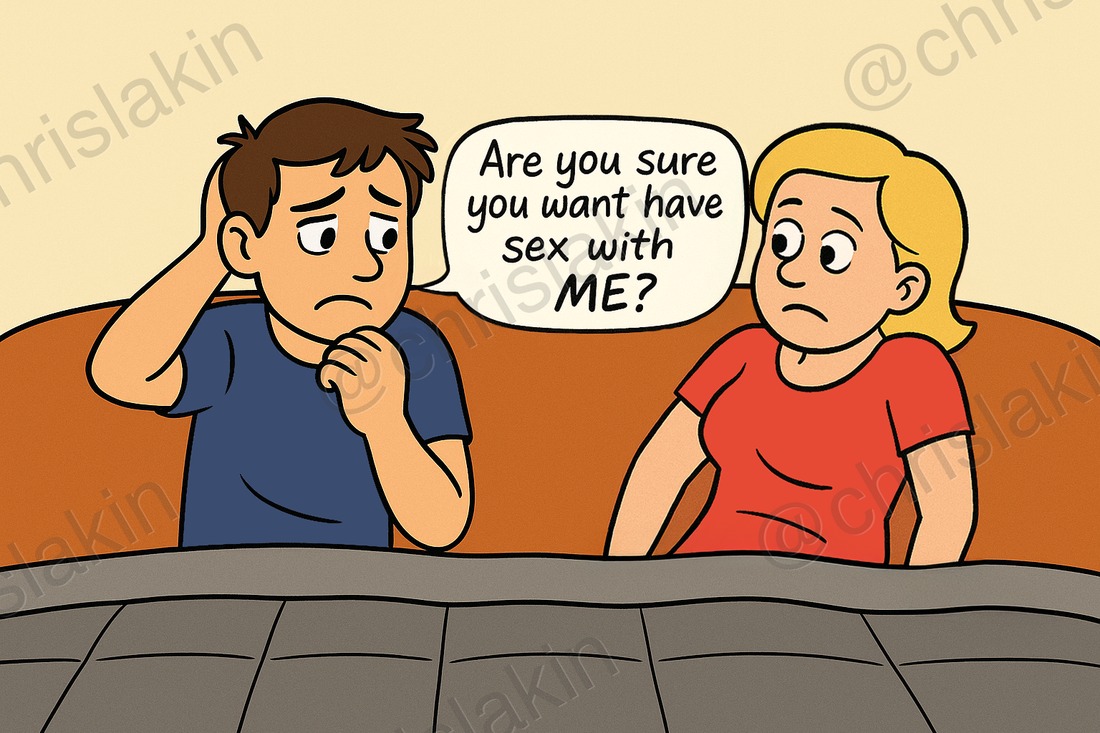
2025 May 6. The commissioned illustration for the dead post.
Where were you, physically, when you wrote the essay? What was going on in your life at the time? And what was your writing environment like (setup, music, ambience)?
He was home in San Francisco, on the couch in his living room — probably no music, and the first sitting started at 9:04 on a Saturday night, so in the dark. It was early in the relationship he is still in; they were spending a couple of hours on the phone most days.
He was pushing to get a backlog of posts out; he shipped “Progress isn't gradual” on May 6, mid-draft of this one.
How did you decide the essay was ‘good enough’ to publish? Do you even think about your bar this way, or do you have some other way of considering the quality of the work you produce?
The good-enough call in the record is Editor 2’s, in the margin, overnight into publication day. Editor 2 had flagged a meta-question — “does everybody who has social anxiety fit this pattern?? of shrinking and never trying to achieve anything?” Chris: no I don't think everyone, though it's very common
. Editor 2, next morning: “Honestly I don't think we rly need to address this to hit publish… the main idea is already fine enough”.
Publication day, 2025 May 16: 12:53pm — first Substack version saved, an empty document. 3:14–3:24pm — 13 saves in 10 minutes. 3:22pm — published, 649 words.
What was the reaction when you initially shared it? Was it what you expected?
I'm not sure what that would mean. I was just posting it to my blog. I thought it was good.
It went up on Substack and LessWrong 4 minutes apart. The tweet came 4 days later; it took 510 likes and 41,000 views — that tweet, he adds, was his editors’ work too. The replies split 3 ways: people saying they'd always assumed this, people disputing that it describes clinical social anxiety, and jokes.
It was submitted to Hacker News twice. The first, on 2025 Jun 26, got 5 points and no comments. 14 weeks later a stranger posted the identical URL and it went to the front page: 2025 Oct 3, 283 points, 218 comments. Views went from 12,814 to 22,773 in about 21 hours. His public reaction: Hacker News was not on my bingo card for this
.
The largest reactions to this essay are other people quoting his chart. In August 2025 @tenobrus took it to 2,732 likes. In March 2026 @elocinationn took it to 7,124. In June 2026 @minordissent took it to 8,915, with 725K views and 3,954 bookmarks — more engagement than the tweet of his that it quotes.
The most concrete outcome his agent found came from someone who read it in August 2025 and tweeted: “this fucking article that made an attempt on my life and held a mirror to my face I wasn't prepared for.” Chris followed up 7 months later, and they replied:
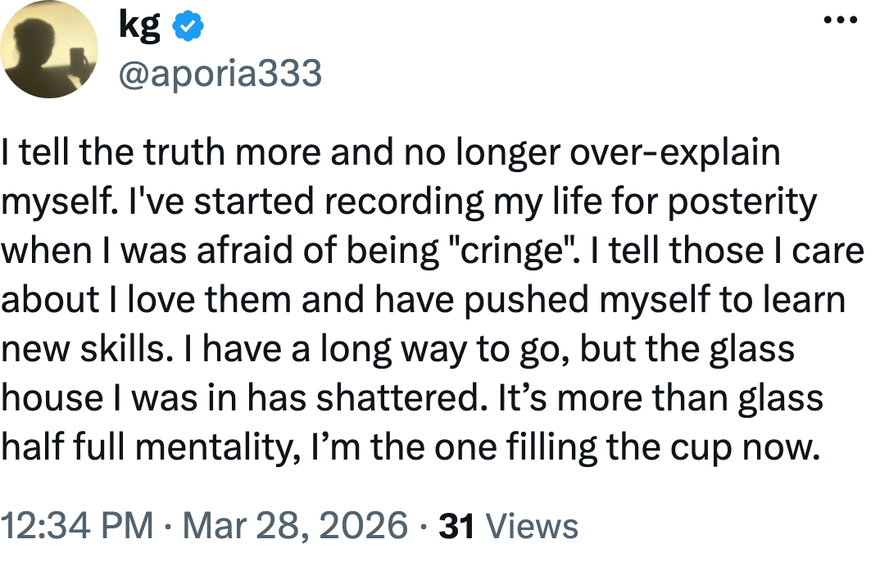
“… It's more than glass half full mentality, I'm the one filling the cup now.”
Reading the essay now, is there anything you would change or that you now disagree with?
I would've already edited it.
He kept editing after publishing — the post has lost roughly a third of its words since it went out. It used to end by giving advice; I removed that when I tracked what people actually do when they read advice on my blog.
There is one exception, and it's the part he can't edit — the URL: which I regret now actually because ‘social-anxiety’ is perceived as low status, I'd prefer risk-aversion (higher status, more intentional / locally-optimal-sounding), maybe I still have to write that post
.
Do you think you have any nonobvious or unpopular opinions about writing?
Most writing can be both shorter and better.
If you want to write more...
Bonus questions
What is your favorite essay on the internet?
Well, Derek Sivers' writing inspired me to start writing online in 2020 so I owe his writing that.
How often does anxiety still come up?
Infrequently enough that I can't really name it, but probably in some high-risk situation where I need to be careful and would otherwise be a bit too brazen for my long-term goals.
It's not like I'm ever fighting anxiety though. What anxiety is is different now — before it was the thing that controlled me and now maybe there's like a warning light that comes up rarely that I listen to then integrate on the spot.